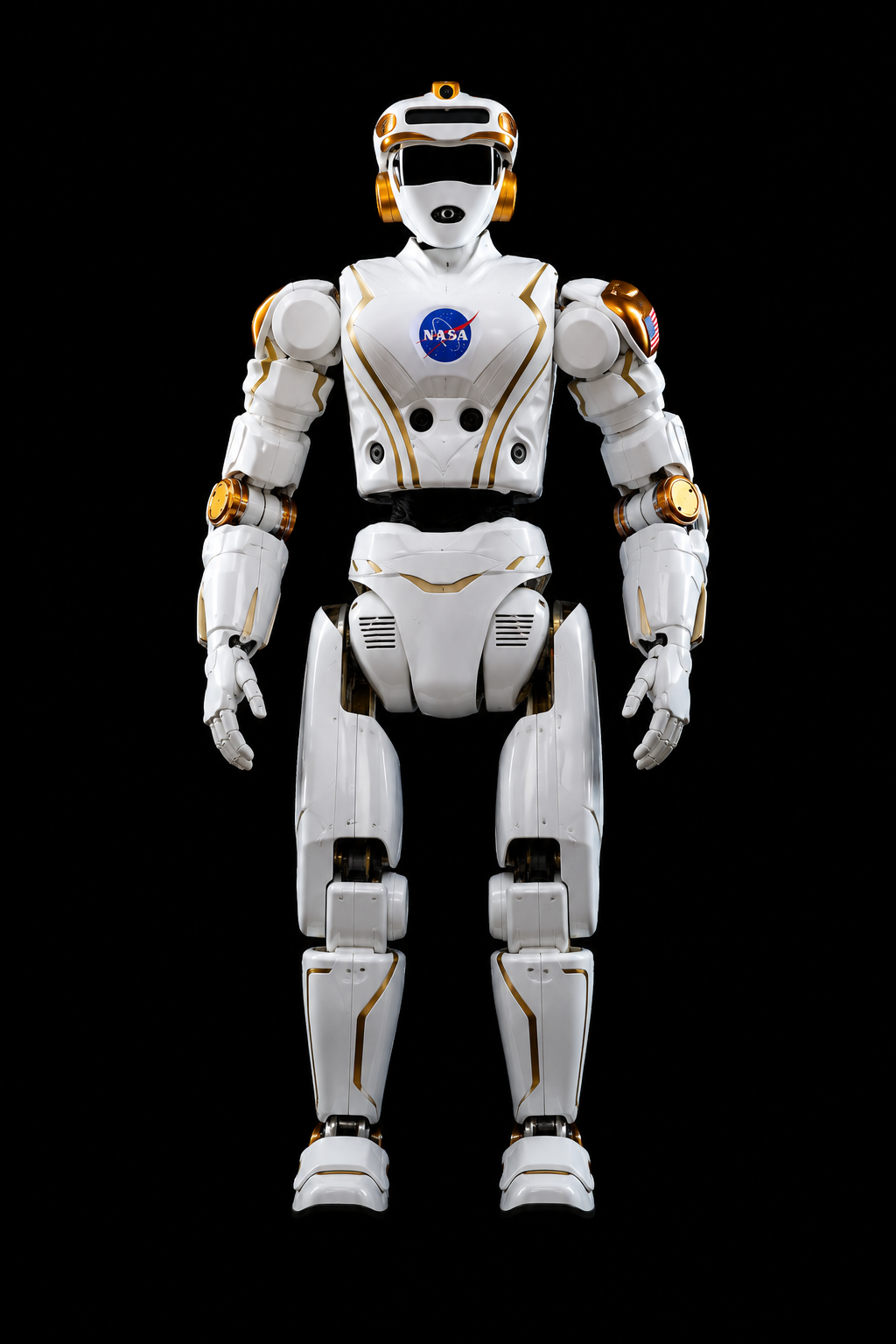
Robonaut 2
Robonaut 2 is a humanoid robot by NASA / General Motors. This robot profile covers robot specs, history, AI technologies, bipedal locomotion, company background, and real-world use cases.
Description
Robonaut 2 (R2) is a humanoid robot jointly developed by NASA and General Motors, designed to work alongside astronauts in space. It became the first humanoid robot in space when it was sent to the International Space Station (ISS) in 2011. With extremely dexterous hands capable of manipulating the same tools as humans, R2 represents a major milestone in space robotics. Robonaut 2 launched to the International Space Station aboard STS-133 in February 2011, becoming the first humanoid robot in space and operating inside the US Orbital Segment for over four years. Its hands feature 12 degrees of freedom each and were specifically designed to operate the same switches, valves, and handrails used by human astronauts eliminating the need for robot-only interfaces aboard the station. The joint NASA-GM development program produced breakthrough force-sensing technology subsequently applied to GM's automotive manufacturing robots, demonstrating direct commercial technology transfer from space robotics research.
Taken together, Robonaut 2 reads as a platform built around height of 100 cm (torso) and weight of 150 kg (with legs), with Ultra-dexterous hands with 12 DoF each, 350+ tactile sensors per hand, and Stereo vision for 3D perception supporting Astronaut assistance in the ISS, Tool manipulation in microgravity, and Space station maintenance. That makes the profile feel more grounded in how NASA / General Motors Houston, Texas, USA is positioning the robot for real operating environments rather than as a one-off demo.
Specifications
In practical terms, these figures describe a robot optimized for Astronaut assistance in the ISS, Tool manipulation in microgravity, and Space station maintenance, while Ultra-dexterous hands with 12 DoF each, 350+ tactile sensors per hand, and Stereo vision for 3D perception define the balance between mobility, perception, and manipulation. The specification set also helps explain the scale of tasks Robonaut 2 can realistically handle today.
History
- 2010: Robonaut 2 unveiled by NASA and GM
- February 2011: R2 sent to the ISS first humanoid in space
- 2014: Legs added for mobility in the ISS
- 2018: R2 returned to Earth for repairs
- 2023: Continuous improvements and tests at JSC
- 2026: Technologies integrated into future space robots
Overall, the timeline shows how Robonaut 2 moved from research or early unveiling toward clearer operational intent, with each stage tightening the link between height of 100 cm (torso) and weight of 150 kg (with legs) and the jobs it is expected to perform. It also shows how the project matured from concept validation into a more deployment-oriented platform.
Use Cases
- Astronaut assistance in the ISS
- Tool manipulation in microgravity
- Space station maintenance
- Extravehicular inspections
- Robotic dexterity research
- Repetitive tasks in the space environment
Across these roles, Robonaut 2 is being framed less as a general-purpose android and more as a system that can repeatedly deliver value in Astronaut assistance in the ISS, Tool manipulation in microgravity, and Space station maintenance. Ultra-dexterous hands with 12 DoF each, 350+ tactile sensors per hand, and Stereo vision for 3D perception are the pieces that make those scenarios believable, because they connect sensing, planning, and physical execution into one workflow.
Technologies dream
Fully autonomous space station maintenance without human intervention, complete EVA capability in microgravity, self-diagnosis and component replacement in space, autonomous orbital structure construction, asteroid exploration.
Past
Robonaut 1 (1997) proved humanoid hands could use astronaut tools. R2 added a full torso and was the first humanoid in space (ISS, 2011).
Present
42-DoF tendon-driven hands, astronaut-tool compatible, ISS operation experience, technology adapted for automotive and telemedicine.
Future
Autonomous space station maintenance, lunar construction, and Mars exploration robots operating years without human intervention.
Technologies
- Ultra-dexterous hands with 12 DoF each
- 350+ tactile sensors per hand
- Stereo vision for 3D perception
- Impedance control for fine manipulation
- Teleoperation from the ground
- Standard EVA tool compatibility
- Fault-tolerant architecture
- Communication via ISS network
Together, these technologies show that Robonaut 2 depends on a layered architecture rather than one breakthrough component. Ultra-dexterous hands with 12 DoF each, 350+ tactile sensors per hand, and Stereo vision for 3D perception provide the core capabilities, while the surrounding stack determines how well the robot can perceive context, stay stable, and complete tasks without fragile scripting.