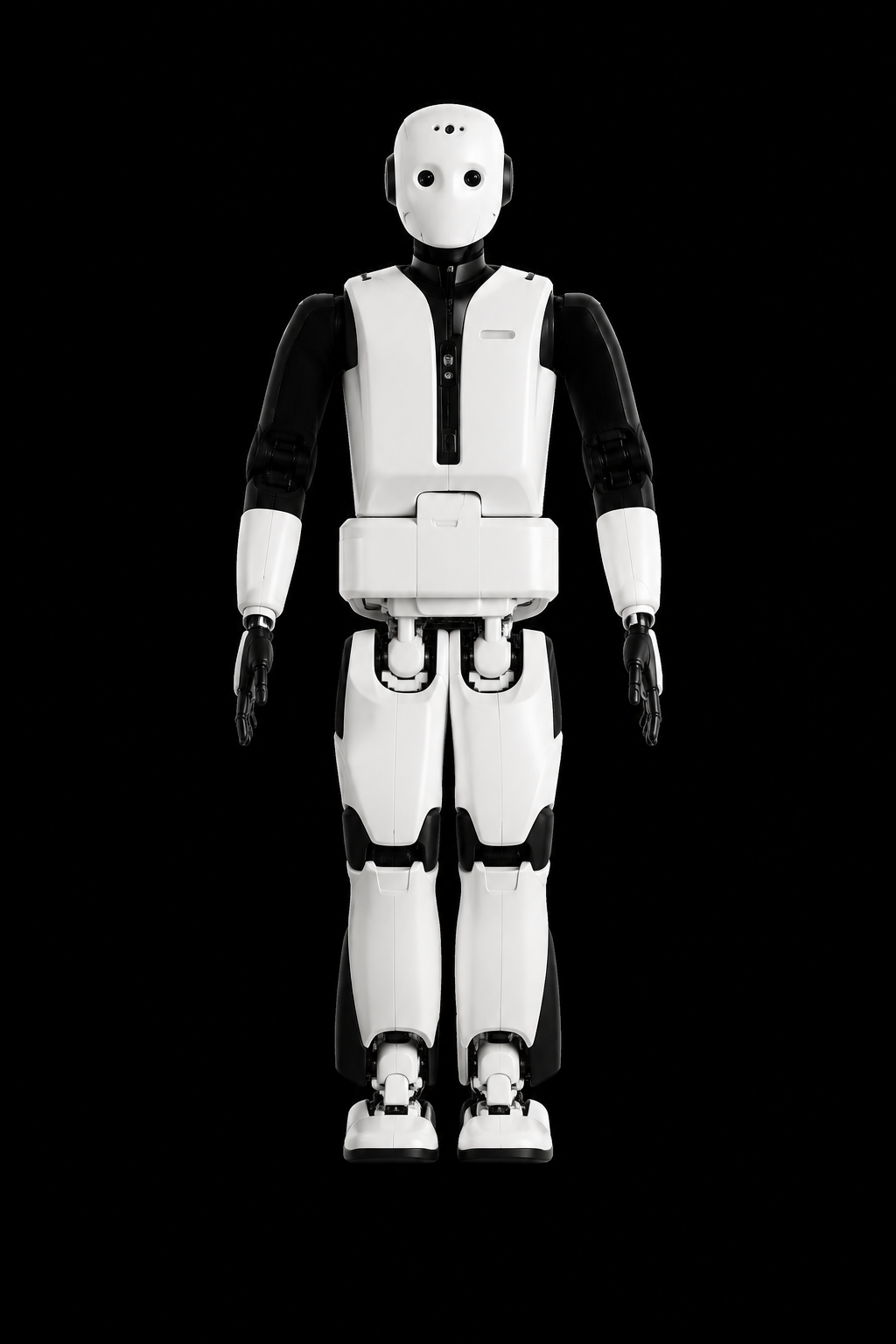
REEM-C
REEM-C is a humanoid robot by PAL Robotics. This robot profile covers robot specs, history, AI technologies, bipedal locomotion, company background, and real-world use cases.
Description
REEM-C is an adult-sized bipedal humanoid robot designed by PAL Robotics as a versatile research platform. It is capable of walking stably, navigating autonomously, and interacting with its environment through deep integration of artificial intelligence. REEM-C was selected as a primary evaluation platform in the EU-funded EUROBENCH project, where multiple research teams benchmarked bipedal locomotion and whole-body control algorithms using standardized protocols for direct cross-laboratory performance comparison. Its sensor suite including stereo cameras, Intel RealSense depth sensor, and 2D LIDAR supports 3D scene reconstruction at 30 fps, enabling SLAM-based autonomous navigation in dynamically changing indoor environments. PAL Robotics provides REEM-C with full ROS integration, open-source URDF models, and a software stack spanning motion planning (MoveIt!), navigation, and perception (PCL, OpenCV).
Taken together, REEM-C reads as a platform built around ai of Integrated, with Stable bipedal walking, Integrated autonomous navigation, and Onboard artificial intelligence supporting Robotics research, Autonomous navigation, and Environmental interaction. That makes the profile feel more grounded in how PAL Robotics Barcelona, Spain is positioning the robot for real operating environments rather than as a one-off demo.
Specifications
In practical terms, these figures describe a robot optimized for Robotics research, Autonomous navigation, and Environmental interaction, while Stable bipedal walking, Integrated autonomous navigation, and Onboard artificial intelligence define the balance between mobility, perception, and manipulation. The specification set also helps explain the scale of tasks REEM-C can realistically handle today.
History
- 2013: REEM-C launched by PAL Robotics
- 2015: Participation in robotics competitions
- 2020: Update with improved AI
Overall, the timeline shows how REEM-C moved from research or early unveiling toward clearer operational intent, with each stage tightening the link between ai of Integrated and the jobs it is expected to perform. It also shows how the project matured from concept validation into a more deployment-oriented platform.
Use Cases
- Robotics research
- Autonomous navigation
- Environmental interaction
- Bipedal research platform
Across these roles, REEM-C is being framed less as a general-purpose android and more as a system that can repeatedly deliver value in Robotics research, Autonomous navigation, and Environmental interaction. Stable bipedal walking, Integrated autonomous navigation, and Onboard artificial intelligence are the pieces that make those scenarios believable, because they connect sensing, planning, and physical execution into one workflow.
Technical Details
The REEM-C humanoid robot from PAL Robotics features brushless and brushed DC motors as actuators, with sensors including stereo cameras, 4 microphones, force/torque sensors on ankles and feet, range finders, and optional depth cameras, powered by two Intel Core i7 computers running ROS as its AI system, offering 68 degrees of freedom (6 DoF legs x2, 7 DoF arms x2, 19 DoF hands x2, 2 DoF waist, 2 DoF neck). Its key capability is stable bipedal walking, stair climbing, and human-robot interaction in research settings.PAL Robotics Datasheet,ROS Robots Wiki
Taken together, this stack suggests a machine whose real advantage comes from how Stable bipedal walking, Integrated autonomous navigation, and Onboard artificial intelligence are coordinated around ai of Integrated. The result is a platform that can convert perception into stable motion and task execution with less operator intervention than a simpler scripted robot.
Technologies dream
Universal research platform with human-level embodied AI, one-demonstration skill learning, instant knowledge transfer between robots, algorithmic self-evolution, total situational awareness.
Past
PAL Robotics built REEM (wheeled, 2006) then REEM-B (bipedal, 2008) before creating REEM-C as their definitive research humanoid platform.
Present
165 cm, 44 DoF, stereo vision, force-torque wrist sensors, RoboCup@Home reference platform, deployed across European research institutions.
Future
Standardized humanoid benchmarking platform enabling fair comparison of AI and control algorithms across research groups worldwide.
Technologies
- Stable bipedal walking
- Integrated autonomous navigation
- Onboard artificial intelligence
- Interaction avec l\'environnement
Together, these technologies show that REEM-C depends on a layered architecture rather than one breakthrough component. Stable bipedal walking, Integrated autonomous navigation, and Onboard artificial intelligence provide the core capabilities, while the surrounding stack determines how well the robot can perceive context, stay stable, and complete tasks without fragile scripting.