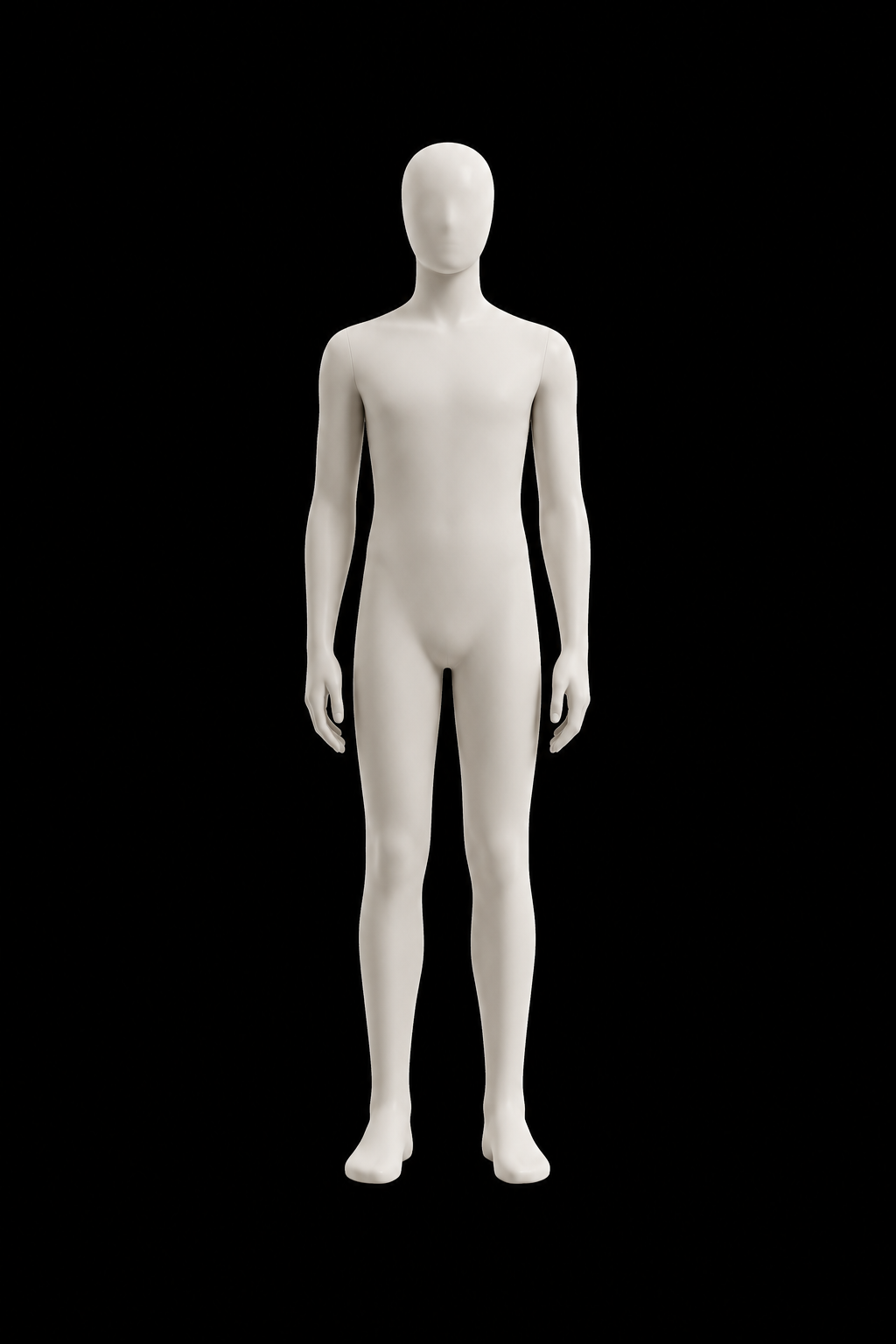
NEO
NEO is a humanoid robot by 1X Technologies. This robot profile covers robot specs, history, AI technologies, bipedal locomotion, company background, and real-world use cases.
Description
NEO is the first consumer home humanoid robot, developed by 1X Technologies. At $20,000, NEO stands 165 cm but weighs only 30 kg thanks to its 3D polymer lattice structure. It can lift 70 kg and carry 25 kg. Its 22-DoF-per-hand design and patented Tendo Drive actuators produce smooth, quiet movements (22 dB). Designed to be safe and discreet in the home. The proprietary Tendo Drive actuators achieve 2% torque accuracy across all joints, enabling the precise force control needed to manipulate household objects ranging from delicate glassware to heavy grocery bags. NEO's 3D polymer lattice structural chassis reduces total weight to 30 kg while supporting a 70 kg payload, yielding a strength-to-weight ratio that surpasses any consumer humanoid at launch. The Redwood vision-language model handles multimodal understanding of natural speech commands combined with real-time visual scene analysis, allowing NEO to interpret instructions like "put the leftovers in the fridge" without explicit object labeling.
Taken together, NEO reads as a platform built around height of 165 cm, weight of 30 kg, and hands of 22 DoF each, with Tendo Drive patented high-torque actuators, Hands with 22 DoF and tendon transmissions, and Ultra-lightweight 3D polymer lattice structure supporting Household tasks, Clothes folding and home maintenance, and Personal assistant with integrated LLM. That makes the profile feel more grounded in how 1X Technologies Moss, Norway is positioning the robot for real operating environments rather than as a one-off demo.
Specifications
In practical terms, these figures describe a robot optimized for Household tasks, Clothes folding and home maintenance, and Personal assistant with integrated LLM, while Tendo Drive patented high-torque actuators, Hands with 22 DoF and tendon transmissions, and Ultra-lightweight 3D polymer lattice structure define the balance between mobility, perception, and manipulation. The specification set also helps explain the scale of tasks NEO can realistically handle today.
History
- 2017: 1X Technologies founded (Halodi Robotics)
- 2023: NEO Gamma prototype presented
- 2024: NEO Beta with major improvements
- October 2025: Final NEO at $20,000 with pre-orders
- 2026: Deliveries in the United States
- 2027: International expansion planned
Overall, the timeline shows how NEO moved from research or early unveiling toward clearer operational intent, with each stage tightening the link between height of 165 cm, weight of 30 kg, and hands of 22 DoF each and the jobs it is expected to perform. It also shows how the project matured from concept validation into a more deployment-oriented platform.
Use Cases
- Household tasks (tidying, vacuuming, laundry)
- Clothes folding and home maintenance
- Personal assistant with integrated LLM
- Reminders and list management
- Home navigation and door opening
- Discreet companionship
Across these roles, NEO is being framed less as a general-purpose android and more as a system that can repeatedly deliver value in Household tasks, Clothes folding and home maintenance, and Personal assistant with integrated LLM. Tendo Drive patented high-torque actuators, Hands with 22 DoF and tendon transmissions, and Ultra-lightweight 3D polymer lattice structure are the pieces that make those scenarios believable, because they connect sensing, planning, and physical execution into one workflow.
Technical Details
The NEO humanoid robot from 1X Technologies uses low-inertia tendon-driven actuators with 2% torque accuracy and link-wise IMUs for precise, safe movements, complemented by dual 8.85MP 90Hz stereo fisheye cameras and 4 beamforming microphones as key sensors. It is powered by the Redwood AI vision-language model and a built-in LLM on the 1X NEO Cortex (NVIDIA Jetson Thor) compute platform, offering 75 total degrees of freedom including 22 DoF per hand, with a key capability of autonomously performing household chores like dish handling while learning via expert teleoperation.1X.tech NEO page,Humanoid.guide
Taken together, this stack suggests a machine whose real advantage comes from how Tendo Drive patented high-torque actuators, Hands with 22 DoF and tendon transmissions, and Ultra-lightweight 3D polymer lattice structure are coordinated around height of 165 cm, weight of 30 kg, and hands of 22 DoF each. The result is a platform that can convert perception into stable motion and task execution with less operator intervention than a simpler scripted robot.
Technologies dream
Autonomous household management with zero human input, emotional bonding with family members over years, self-upgrading hardware modules, universal tool use from screwdrivers to musical instruments, 1X's vision of one robot per home.
Past
1X Technologies developed EVE (wheeled) first, validating embodied AI and quasi-direct-drive actuators before tackling the harder problem of bipedal locomotion.
Present
Tendo Drive actuators (2% torque accuracy), 22-DoF hands, 3D polymer lattice frame (30 kg total), Redwood VLA model, dual 8.85MP stereo fisheye cameras.
Future
Mass consumer adoption at $20,000, learning household routines through observation, emotional companion capabilities via advanced language models.
Technologies
- Tendo Drive patented high-torque actuators
- Hands with 22 DoF and tendon transmissions
- Ultra-lightweight 3D polymer lattice structure
- Onboard LLM for voice understanding
- Visual + depth perception
- Autonomous navigation domestique
- Soft mesh suit for safety
- Silent mode 22 dB
Together, these technologies show that NEO depends on a layered architecture rather than one breakthrough component. Tendo Drive patented high-torque actuators, Hands with 22 DoF and tendon transmissions, and Ultra-lightweight 3D polymer lattice structure provide the core capabilities, while the surrounding stack determines how well the robot can perceive context, stay stable, and complete tasks without fragile scripting.