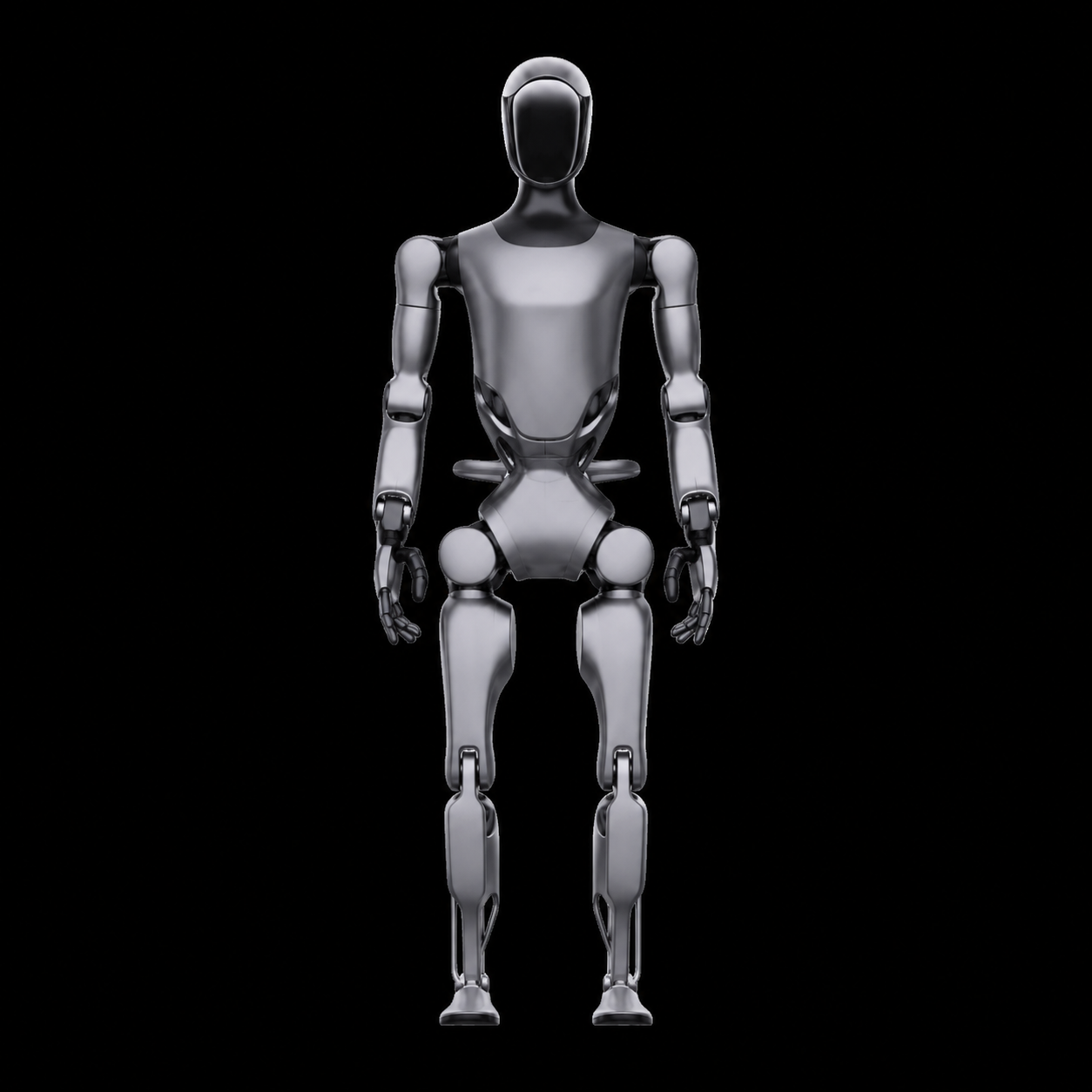
GR-2
GR-2 is a humanoid robot by Fourier Intelligence. This robot profile covers robot specs, history, AI technologies, bipedal locomotion, company background, and real-world use cases.
Description
The Fourier GR-2 is the second generation of Fourier Intelligence's humanoid robot, with significant improvements in manipulation and perception compared to the GR-1. The GR-2 integrates advanced dexterous hands and an updated software architecture for more complex manipulation tasks. It represents Fourier's evolution toward broader commercial applications beyond rehabilitation. Compared to GR-1, the GR-2 features significantly upgraded dexterous hands with 12 DoF each, enabling in-hand manipulation tasks such as cable threading, nut installation, and precision object reorientation not feasible on the first generation. Fourier Intelligence validated the GR-2's whole-body controller in industrial pilot trials requiring simultaneous locomotion and manipulation walking while carrying a component tray and placing parts with millimeter accuracy. The GR-2 also upgrades onboard compute to an Intel Core i7 platform, supporting real-time neural network inference for vision-based manipulation without cloud dependency.
Taken together, GR-2 reads as a platform built around height of 175 cm, weight of 63 kg, and dof of 53, with Improved multi-finger dexterous hands, Improved visual + depth perception, and Smart Actuator modules V2 supporting Advanced industrial manipulation, Rehabilitation and healthcare, and Logistics and warehousing. That makes the profile feel more grounded in how Fourier Intelligence Shanghai, China is positioning the robot for real operating environments rather than as a one-off demo.
Specifications
In practical terms, these figures describe a robot optimized for Advanced industrial manipulation, Rehabilitation and healthcare, and Logistics and warehousing, while Improved multi-finger dexterous hands, Improved visual + depth perception, and Smart Actuator modules V2 define the balance between mobility, perception, and manipulation. The specification set also helps explain the scale of tasks GR-2 can realistically handle today.
History
- 2024: GR-2 announced and presented at conferences
- 2024: Tests with industrial and healthcare partners
- 2025: First pilot deployments of the GR-2
- 2025: Ongoing software improvements
- 2026: Commercial-scale production launched
Overall, the timeline shows how GR-2 moved from research or early unveiling toward clearer operational intent, with each stage tightening the link between height of 175 cm, weight of 63 kg, and dof of 53 and the jobs it is expected to perform. It also shows how the project matured from concept validation into a more deployment-oriented platform.
Use Cases
- Advanced industrial manipulation
- Rehabilitation and healthcare
- Logistics and warehousing
- Embodied AI research
- Assistance for people with reduced mobility
- Operations in service environments
Across these roles, GR-2 is being framed less as a general-purpose android and more as a system that can repeatedly deliver value in Advanced industrial manipulation, Rehabilitation and healthcare, and Logistics and warehousing. Improved multi-finger dexterous hands, Improved visual + depth perception, and Smart Actuator modules V2 are the pieces that make those scenarios believable, because they connect sensing, planning, and physical execution into one workflow.
Technical Details
The GR-2 humanoid robot from Fourier Intelligence features FSA 2.0 series elastic actuators with peak torques exceeding 380 N·m across up to 53 degrees of freedom, including 12-DoF dexterous hands equipped with 6 array-type tactile sensors for precise manipulation.Humanoid Press, Fourier GR-2 PDF It integrates multi-camera vision systems, sensor fusion for environmental awareness, and an AI software stack compatible with NVIDIA Isaac Lab, ROS, and MuJoCo, enabling key capabilities like real-time tactile-driven grasping, bipedal, and simulation-to-real transfer for complex tasks.Engineering.com, Fourier Robotics
Taken together, this stack suggests a machine whose real advantage comes from how Improved multi-finger dexterous hands, Improved visual + depth perception, and Smart Actuator modules V2 are coordinated around height of 175 cm, weight of 63 kg, and dof of 53. The result is a platform that can convert perception into stable motion and task execution with less operator intervention than a simpler scripted robot.
Technologies dream
Full robot-exoskeleton fusion the robot becomes an extension of the human body, direct neural interface for thought-based control, ability to carry a human for kilometers, rehabilitation via combined neural stimulation.
Past
GR-1's success in mass production validated Fourier's integrated actuator approach. GR-2 added dexterous manipulation as the next critical capability.
Present
FSA 2.0 series elastic actuators, 53 DoF, 12-DoF hands with 6 array-type tactile sensors, 380+ N·m peak torque, improved perception stack.
Future
Autonomous industrial assembly, collaborative manufacturing with human workers, transfer learning from simulation for rapid task adaptation.
Technologies
- Improved multi-finger dexterous hands
- Improved visual + depth perception
- Smart Actuator modules V2
- Updated AI architecture
- Adaptive force control
- Improved autonomous navigation
- Enhanced development SDK
- Cloud integration for continuous learning
Together, these technologies show that GR-2 depends on a layered architecture rather than one breakthrough component. Improved multi-finger dexterous hands, Improved visual + depth perception, and Smart Actuator modules V2 provide the core capabilities, while the surrounding stack determines how well the robot can perceive context, stay stable, and complete tasks without fragile scripting.