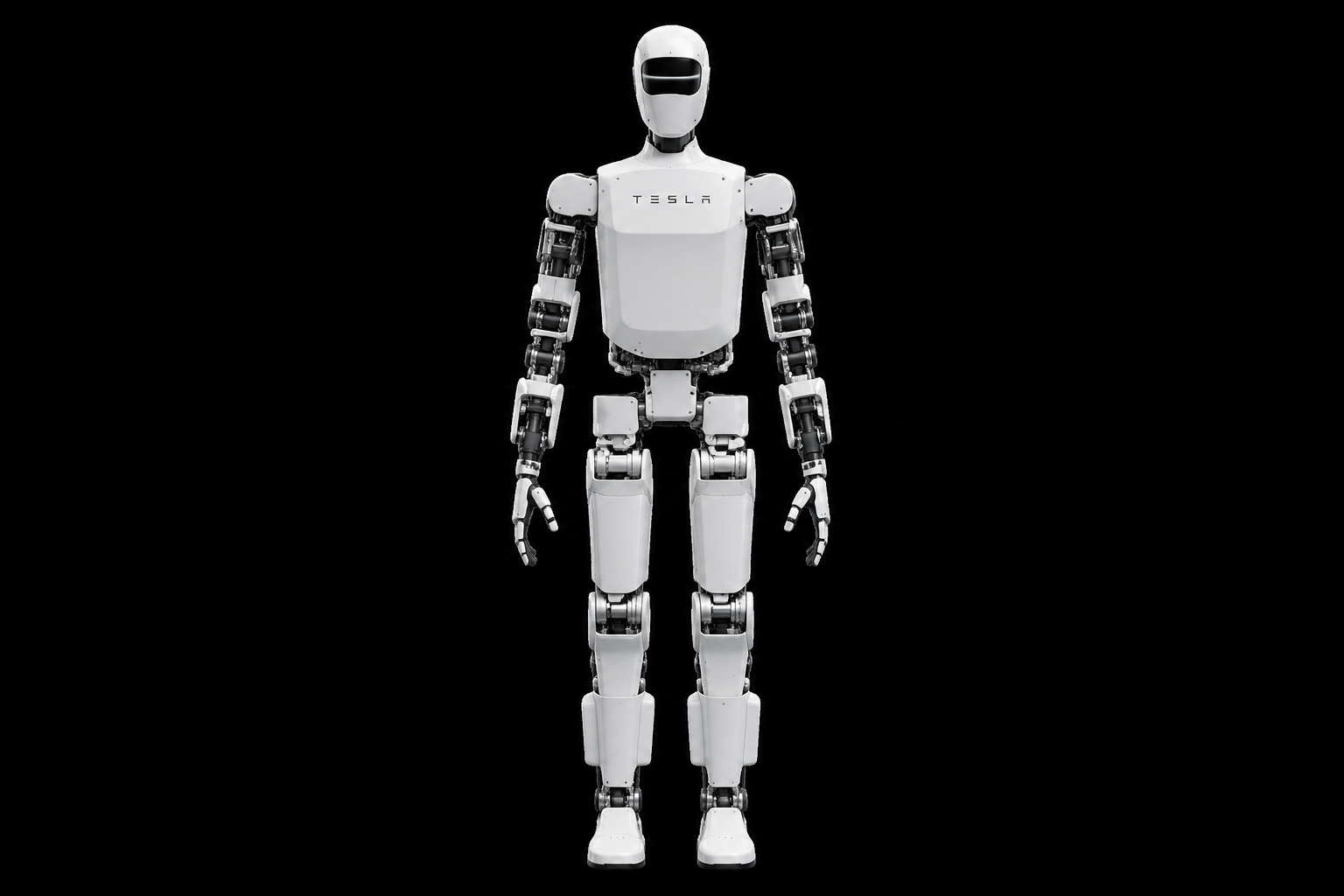
Borg 01
Borg 01 is a humanoid robot by Borg Robotics. This robot profile covers robot specs, history, AI technologies, bipedal locomotion, company background, and real-world use cases.
Description
The Borg 01 is a modular humanoid robot designed in Detroit to automate repetitive and physically demanding industrial tasks. It can autonomously switch between bipedal walking and a wheeled base, while adapting to various environments through its advanced AI. Borg 01's autonomous locomotion mode switching transitioning between bipedal walking and wheeled rolling based on terrain classification delivers up to twice the energy efficiency on flat factory floors compared to continuous bipedal walking, while retaining stair-climbing capability for multi-floor facilities. The standardized tool-changer interface on each wrist enables end-effector swaps in under 30 seconds without tools, allowing rapid re-tasking from precision assembly to material handling to inspection within the same shift. Its Detroit-based development team drew on the region's deep automotive manufacturing expertise to design Borg 01's task architecture around existing automotive production line ergonomics and workflow patterns.
Taken together, Borg 01 reads as a platform built around application of Industriel, with Modular biped/wheeled architecture, Advanced environmental adaptation AI, and Autonomous transition between locomotion modes supporting Industrial automation, Factory material handling, and Physically demanding tasks. That makes the profile feel more grounded in how Borg Robotics Detroit, Michigan, USA is positioning the robot for real operating environments rather than as a one-off demo.
Specifications
In practical terms, these figures describe a robot optimized for Industrial automation, Factory material handling, and Physically demanding tasks, while Modular biped/wheeled architecture, Advanced environmental adaptation AI, and Autonomous transition between locomotion modes define the balance between mobility, perception, and manipulation. The specification set also helps explain the scale of tasks Borg 01 can realistically handle today.
History
- 2024: Borg Robotics founded in Detroit
- 2025: Borg 01 prototype unveiled
- 2025: Modular bipedal/wheeled mode demonstration
Overall, the timeline shows how Borg 01 moved from research or early unveiling toward clearer operational intent, with each stage tightening the link between application of Industriel and the jobs it is expected to perform. It also shows how the project matured from concept validation into a more deployment-oriented platform.
Use Cases
- Industrial automation
- Factory material handling
- Physically demanding tasks
- Warehouse logistics
Across these roles, Borg 01 is being framed less as a general-purpose android and more as a system that can repeatedly deliver value in Industrial automation, Factory material handling, and Physically demanding tasks. Modular biped/wheeled architecture, Advanced environmental adaptation AI, and Autonomous transition between locomotion modes are the pieces that make those scenarios believable, because they connect sensing, planning, and physical execution into one workflow.
Technical Details
The Borg 01 humanoid robot from Borg Robotics features proprietary Borg Actuator modules delivering up to 270 Nm torque at 1.6 kg (Borg Robotics X), vision systems and proximity sensors for navigation (Aparobot), and advanced neural networks enabling autonomous task adaptation with 23 degrees of freedom (Humanoid.guide). Its key capability is modular switching between bipedal and wheeled mobility for 12 kg payload handling in industrial environments (Humanoid.guide).
Taken together, this stack suggests a machine whose real advantage comes from how Modular biped/wheeled architecture, Advanced environmental adaptation AI, and Autonomous transition between locomotion modes are coordinated around application of Industriel. The result is a platform that can convert perception into stable motion and task execution with less operator intervention than a simpler scripted robot.
Technologies dream
Autonomous fleet of thousands coordinated by collective AI, universal manipulation of any object, 48-hour solid-state battery autonomy, self-diagnosis and predictive maintenance, instant adaptability to any industrial environment.
Past
Borg Robotics applied Detroit automotive manufacturing expertise to humanoid design, optimizing for factory-floor durability and maintainability.
Present
45 kg payload, swappable batteries, modular limb quick-replacement, designed for repetitive industrial tasks, multi-shift operation.
Future
Self-maintaining factory robots that swap their own damaged parts, autonomous 24/7 manufacturing without human intervention.
Technologies
- Modular biped/wheeled architecture
- Advanced environmental adaptation AI
- Autonomous transition between locomotion modes
- Autonomous industrial navigation
Together, these technologies show that Borg 01 depends on a layered architecture rather than one breakthrough component. Modular biped/wheeled architecture, Advanced environmental adaptation AI, and Autonomous transition between locomotion modes provide the core capabilities, while the surrounding stack determines how well the robot can perceive context, stay stable, and complete tasks without fragile scripting.